Solar Spice and Herb Dryers for Hygienic Agricultural Processing
Wiki Article
Introduction
Spices and herbs require careful processing because their commercial value can depend on characteristics such as appearance, aroma and handling quality. Drying is one of the key stages in preparing many agricultural products for storage or further processing.
Solar drying offers an approach that uses solar thermal energy rather than relying entirely on conventional fuel-based heating. Rudra Solar Energy includes solar spice and solar herb dryers in its product range and describes applications for suitable agricultural products.
Why Drying Matters for Spices and Herbs
Fresh plant materials can contain significant moisture. Drying reduces this moisture and changes the physical condition of the material.The appropriate drying process depends on the particular spice or herb. Different products can have different structures, moisture levels and desired final conditions.
Preparation Before Drying
Preparation can include cleaning, sorting, cutting or other steps depending on the material. Consistent preparation helps make batches more comparable.The thickness of slices or pieces can influence drying because moisture has to travel through the material before reaching the surrounding air.
Solar Spice Dryers
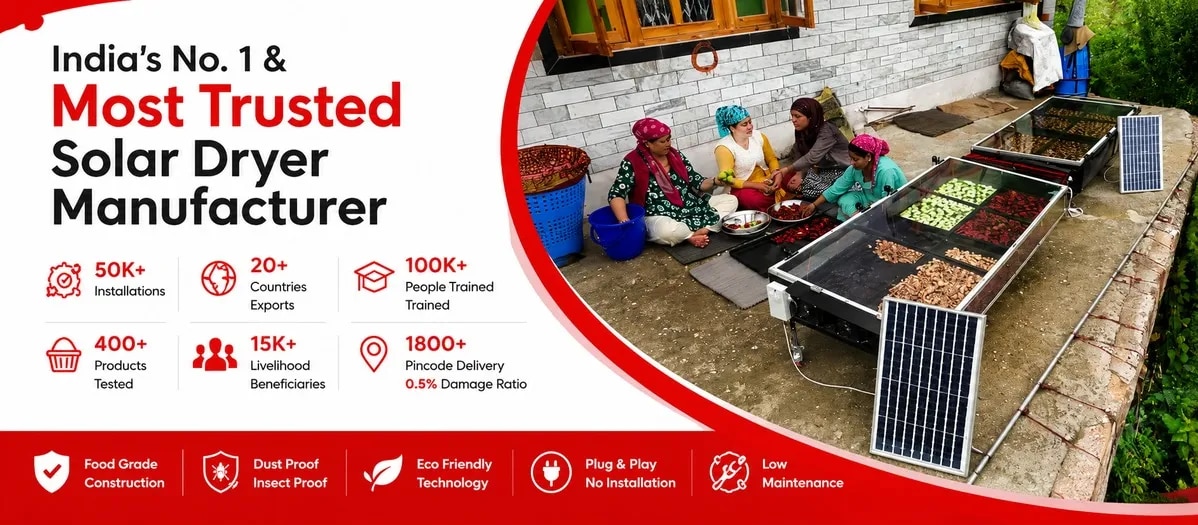
Rudra Solar Energy lists a solar spice dryer for products including chilli, turmeric, ginger and black pepper. :contentReference[oaicite:41]index=41The appropriate configuration should be selected according to the actual commodity and processing requirement.
Controlled Handling
An enclosed dryer can help reduce direct exposure to dust, insects, birds and sudden rain compared with open-sun drying. Rudra Solar Energy identifies this as one of the advantages of its cabinet drying approach. :contentReference[oaicite:42]index=42For spice processors, controlled handling can be an important part of maintaining consistent processing practices.
Solar Herb Drying
Herbs may require careful handling because some plant materials are delicate. Rudra Solar Energy offers a solar herb dryer for medicinal, culinary and aromatic herb processing. :contentReference[oaicite:43]index=43Why Product Specific Processes Matter
Not every herb should be processed under identical conditions. The operator needs to consider the plant material, preparation, desired final condition and intended use.The same principle applies to spices.
Airflow and Moisture Removal
Drying is not simply a matter of making the chamber hot. Moisture moves from the product into the surrounding air, and airflow helps remove moisture-laden air.Rudra's cabinet dryer information explains that effective drying depends on the relationship between solar heat, airflow, tray loading, product surface area and moisture removal.
Loading the Trays
Operators should avoid unnecessary overloading. Material should be distributed according to the equipment and commodity requirements.Important variables include:
- Product thickness
- Quantity per tray
- Air circulation
- Initial moisture
- Ambient humidity
- Solar radiation
- Desired final moisture
Hygiene in Spice and Herb Processing
Drying Solar Dehydrator Machine should be part of a clean processing workflow. Raw materials should be handled appropriately before loading, while trays and other food-contact surfaces should be Click Here cleaned according to suitable procedures.After drying, products should be protected from moisture and contamination.
Packaging Matters
A properly dried product can still be affected by poor packaging. Exposure to humid air can allow the material to absorb moisture again.Packaging should therefore be selected according to the characteristics of the dried spice or herb and its intended storage conditions.
Capacity Selection
Rudra Solar Energy offers solar dryer configurations from small batch systems through larger commercial models. Its general solar dryer range includes capacities from 5 kg per batch to 500 kg per batch. :contentReference[oaicite:45]index=45A spice processor should choose capacity based on actual raw material availability and processing frequency.
Commercial Processing
A business handling regular spice batches may require a larger configuration. A small producer may prefer a smaller system for seasonal or limited production.The best capacity is therefore the one that fits the operational requirement.
Solar Drying Technology
Backup Options
Depending on the model, Rudra Solar Energy lists optional electric or biomass backup. :contentReference[oaicite:46]index=46Backup can be considered where weather conditions or production schedules make uninterrupted processing important.
Conclusion
Solar drying can provide spice and herb processors with an enclosed approach to moisture reduction using solar thermal energy. Rudra Solar Energy offers dedicated solar spice and herb drying solutions alongside its broader agricultural drying range. :contentReference[oaicite:47]index=47The final processing outcome depends on product selection, preparation, loading, airflow, solar conditions, moisture requirements, hygiene, packaging and storage. A suitable dryer should therefore be selected only after understanding the commodity and production requirements.
For spice and herb businesses seeking to integrate solar energy into processing, a properly planned solar drying system can become part of a structured and potentially scalable production workflow.
 Report this wiki page